

The III. International Loneliness Symposium, titled "Digitalization and Loneliness" and organized by Üsküdar Üniversitesi on December 10-11, 2021, has been published as a book. The book, published by Üsküdar Üniversitesi Publications, was edited by Sociology Department faculty members Prof. Dr. Ebulfez Süleymanlı, Dr. Lecturer Nihan Kalkandeler, Research Assistant Bengi Çakmak, and Research Assistant Berat Dağ.
Content
The Book "Digitalization and Loneliness" Takes Its Place on Shelves
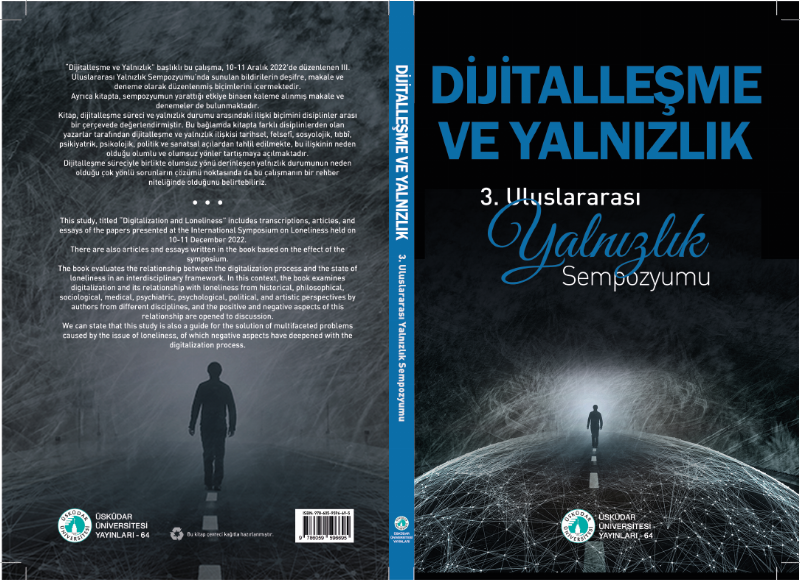
The symposium book features articles and essays penned by academics, artists, and researchers from five different countries. The book "Digitalization and Loneliness" consists of four main sections. The book, to which Üsküdar Üniversitesi Founding Rector Prof. Dr. Nevzat Tarhan also contributed, has met readers. In the book, Prof. Dr. Tarhan emphasizes the deepening negative effects of the digitalization process from physical, psychiatric, psychological, and social perspectives, and highlights the values of justice, solidarity, sacrifice, humility, and well-being within the framework of positive psychology against these effects.
The book includes the findings of the articles titled "Turkey Digitalization and Loneliness Research Results" by Üsküdar Üniversitesi Faculty of Humanities and Social Sciences faculty members Prof. Dr. Ebulfez Süleymanlı and Dr. Lecturer Nihan Kalkandeler, sharing results that anticipate digital culture focusing on determining its power to transform individuals' social relationships by measuring their level of loneliness perception.
Furthermore, Associate Professor Dr. Cem Tutar, a faculty member at Üsküdar Üniversitesi Faculty of Communication, who also contributed to the book, along with Sociologist-Communication Specialist Bilge Evran, states in the essay they penned that the limitation of subjects within virtual topographies created by the possibilities of digital technologies is decisive in the process of metropolises detaching from urban areas.
Other scientists who contributed to the book are as follows:
In her essay titled "Deep Loneliness in the Digital World," Prof. Dr. Milay Köktürk philosophically addresses the relationship between the process of loneliness affecting an individual's mental world, the concept of depth, and digital changes and transformations. In her article, Prof. Dr. Fulya Bayraktar, from a philosophical perspective, touches upon the alienation caused by digitalization, stating that this situation is important in the sense of reminding humans of their essential nature.
Prof. Dr. Kadriye Bakırcı, from a legal perspective, examines the relationship between the process of isolating individuals, groups, or certain groups in working life and their exposure to social isolation, poverty, violence, and discrimination. In the article penned by Associate Professor Dr. Mustafa Günay, the concepts of loneliness and togetherness are deepened in the context of human relationships and digitalization, evaluating the boundaries and possibilities created by these concepts.
Prof. Dr. F. Belma Oğul and Research Assistant Oğul Köker, with their article titled "The Home Studio as a Man's Space of Loneliness," go beyond narratives centered on the democratizing power of existing technology and open up a discussion on how masculinity is constructed in home studios.
From Kazakhstan, Psychologist Botagöz Tolepbergenova and Associate Professor Dr. Yelena Barabanova address loneliness, a problem of modern society in the context of digital communication, as a lifestyle for modern adults, emphasizing the positive and negative aspects of living alone. From Russia, Ryazantsev, Rostovskaya, and Yurievna, referring to the digital age, pen the life practices of lonely migrant women. From Kyrgyzstan, Riga Salmorbekova examines the impact of the loneliness situation in modern society on individuals' sleep patterns, attention, logical and verbal thinking, immune system, and hormonal balance in the context of Kyrgyz society. In her essay, Prof. Dr. Nigina Rakhimova brings to the agenda the difference in the impact of the pandemic process on society in general, especially on families, in Uzbekistan.
Author Hülya Mutlu examines the relationship between loneliness and the business world around the concepts of competition, diversity, inclusivity, the search for meaning, and friendship. Producer and Screenwriter Birol Güven, on the other hand, presents readers with an essay arguing that, contrary to popular belief, technology and digitalization possess a quality that distances individuals, especially young people, from the feeling, thought, and state of loneliness.
The book "Digitalization and Loneliness" aims to explain and understand the process of digitalization and the state of loneliness within an interdisciplinary and relational integrity. Similarly, it is possible to emphasize that the book also aims to develop a comprehensive solution proposal for the multi-causal, multi-faceted, and gradual problems encountered within the framework of the relationship between digitalization and loneliness.
Share
Update Date: March 01, 2026
Creation Date: December 15, 2022
Request a Call
Other News
- The book that read today's digital threats in 2014: Being a Conscious Family
- Experts warn: 'Instead of memorizing letters, teach pencil grip, scissor use, and coloring'
- School fear and school love both start in the family!
- Family is not merely transforming, it is being battered under a serious assault
- Artificial intelligence opens the door to early diagnosis in autism!