

Social media, which has become a part of our lives recently and where we spend a significant portion of our day, has been examined from a psychological perspective. The book “Social Media Psychology,” prepared under the editorship of Prof. Dr. Nevzat Tarhan and Assoc. Prof. Dr. Aylin Tutgun Ünal, is now on the shelves. The book, which thoroughly examines social media usage habits from theoretical, psychological, and clinical perspectives, brings important information to readers about how our relationship with social media should be.
Content
Book Released That Will Define Our Relationship with Social Media
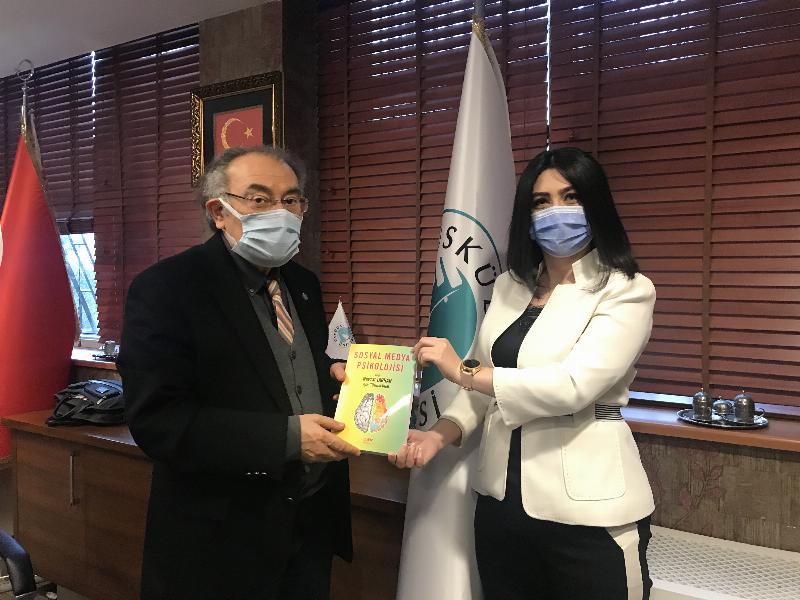
In the book, presented to readers by DER Yayınları, social media, which has recently become the focal point of our lives, was examined particularly for its psychological impact.
Social media psychology was approached multidisciplinarily
The book, which examines social media usage habits from three different perspectives—theoretical, psychological, and clinical—features articles by many experts in the field. 'Social Media Psychology' meticulously investigates social media's connection with concepts such as Gen Z, parenting, narcissism, loneliness, habit, attachment, depression, and memory.
Prof. Dr. Nevzat Tarhan: “The digital generation lives in a different reality than previous generations”
Stating that the publication of such an important topic as Social Media Psychology in book form will meet a significant need, Üsküdar Üniversitesi Founding Rector, Psychiatrist Prof. Dr. Nevzat Tarhan, said that digital generations live in a different reality than previous generations. Tarhan, who is also the editor of the book, made the following evaluations in his introductory remarks: “In psychiatric practice, we use neurodevelopmental scales. With these scales, we measure certain skills, and if these skills are developed, we decide whether the person has a pervasive developmental disorder. These skills include logical, fine motor, gross motor, language, social, sensory, and emotional skills. If a child, upon starting to walk, is not in a natural social environment, they cannot transform their abilities into skills. As seen in cases of feral children like the Ukrainian Oxana Malaya, they can remain at a primitive level. For this reason, children who grow up in front of a TV or with a tablet in hand, like having a cheap babysitter, present to clinics with delayed speech and show autistic symptoms. If these cases persist, they can turn into a clinical picture defined as “learned autism.” In this study, you will find very compiled information on how our relationship with social media should be. Our young colleagues put in a lot of effort. Working with them was very beneficial for me too. I congratulate them and wish you a good read.”
Prof. Dr. Gökben Hızlı Sayar: “Social media usage habits are examined from theoretical, psychological, and clinical perspectives”
In the book's foreword, Üsküdar Üniversitesi Social Sciences Institute Director Prof. Dr. Gökben Hızlı Sayar pointed out that internet use is increasing day by day in all areas of life, and the internet connection, now available in every pocket for entertainment and communication purposes, has led to the emergence of the concept of “social media.” She added that social networking platforms have become indispensable in life.
Sayar used the following expressions: “Social media elements such as instant messaging applications, social networking sites, blogs, and microblogs have become an indispensable part of life for a large portion of society, especially young people. Social media platforms provide users with benefits such as socializing, accessing new opportunities, fostering imagination and creativity, and feeling a sense of belonging to a group. However, the diversification of social media types and the widespread use of easier access have brought with them many controversial issues. Research shows that the use of new technologies can easily exceed their original purposes. For example, social media's elimination of temporal and spatial distance can easily lead to a loss of control over the time spent on digital technology. A series of attitudes and behaviors, such as an increasing need for social media use, experiencing distress when social media is inaccessible, needing social media to soothe oneself, and using it in a way that neglects family and professional responsibilities, gradually push a person towards social media addiction. In this book, Dr. Aylin Tutgun Ünal and her colleagues thoroughly examine social media usage habits from theoretical, psychological, and clinical perspectives. They analyze and convey to us the effects of social media in many areas, from Generation Z to parenting, from narcissism to loneliness, from habit to addiction, from depression to memory. They show us the relationships between social media use and diverse fields such as political psychology, postmodern culture, perception management, and psychotherapy. I hope this book will be beneficial to all readers who wish to look at social media from a different perspective and a broad framework…”
Assoc. Prof. Dr. Aylin Tutgun Ünal, a faculty member at Üsküdar Üniversitesi Communication Faculty and one of the book's editors, stated in her thank-you note that the idea of publishing a multi-dimensional and current book on social media psychology greatly excited her. She expressed her gratitude to everyone who contributed to the work, which she believes will be influential in its field.
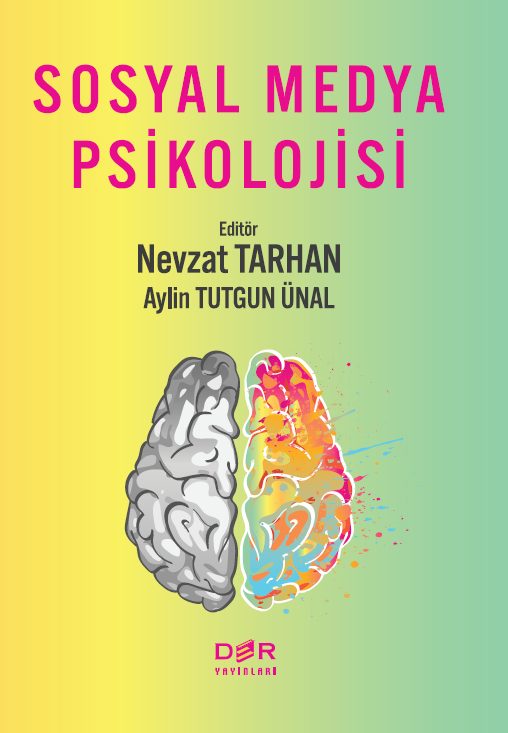
Articles by experts in the field all together!
While Prof. Dr. Gökben Hızlı Sayar wrote the introduction to the book, which was presented by Prof. Dr. Nevzat Tarhan, the names and topics of those who contributed to the book are listed as follows:
Şaban Özdemir - “Social Media Psychology in the Context of Gen Z's Media Usage Habits”
Dilek Özkan-Aylin Tutgun Ünal - “The Psychology of Believing and Spreading Disinformation”
Ayşe Şahin - “Children and Social Media”
Bedia Ferhan Kırış - “Social Media and Parenting: The Psychology of “Sharenting””
Dilara Murat Büyük - “Social Media, Body Image, and the Desire to Be Liked”
Aylin Tutgun Ünal - İlayda Tüter - “New Trend Meetings and New Fatigues in Social Networks: The Case of “Zoom Fatigue””
Zehra Rümeysa Fidan - “An In-Depth Interview with Nevzat Tarhan on Lynching Culture in Social Media”
Yıldıray Kesgin – “The Reproduction of Islamophobia in New Media: The 9Gag Example”
Cem Tutar – “Postmodern Culture and Social Media in the Reflective Production Process of the Self: A Theoretical Discussion on Platforms”
Ali Ruhan Çelik – “A Politico-Psychological Phenomenon: Social Media”
Meryem Gülteki Ayluçtarhan – “Social Media Addiction and Depression”
Patrizia Muradi – “Instagram Addiction”
Elif Kaleli - “An Extraordinary Attachment Story: Mother, Baby, and Instagram: Mirror, mirror on the wall, does my mother love me more or us?”
Selvinaz Çınar Parlak - Aylin Tutgun Ünal - “Loneliness in the Crowd: On Social Media and Loneliness”
Didem Tekin – “Virtual Arrogance: The Dance of Social Media and Narcissism”
Muhammed Arıkan – “Psychotherapy Process of a Case with Narcissistic Personality Disorder and Social Media Addiction: A Case Presentation from a Schema-Mode Therapy Perspective”
Muratcan Keskiner - “The Impact of Influencers on Us”
Neylan Zümrüt – “Social Media and the Dimensions of the Self”
Aylin Aydın – “On the Relationship Between Social Media and Memory”
Ayşe Sena Kurt – “Online Gambling Addiction in the Axis of Social Media”
Nursen Doğan – “Social Media and Perception Management”
Share
Update Date: February 27, 2026
Creation Date: April 09, 2021
Request a Call
Other News
- The book that read today's digital threats in 2014: Being a Conscious Family
- Experts warn: 'Instead of memorizing letters, teach pencil grip, scissor use, and coloring'
- School fear and school love both start in the family!
- Family is not merely transforming, it is being battered under a serious assault
- Artificial intelligence opens the door to early diagnosis in autism!