

Stating that bipolar disorder is a brain disease related to the disruption of the brain's biochemical function, Psychiatrist Prof. Dr. Nevzat Tarhan noted that the prevalence of bipolar disorder in society ranges between 1 and 5 percent. Prof. Dr. Nevzat Tarhan emphasized that medication treatment should particularly not be interrupted, stating that there is a 60 percent recurrence rate if medication treatment is stopped. Tarhan also noted that bipolar disorder is observed in children and adolescents, warning that it can especially be confused with attention deficit and hyperactivity disorder.
Content
Medication Treatment for Bipolar Disorder Should Not Be Discontinued
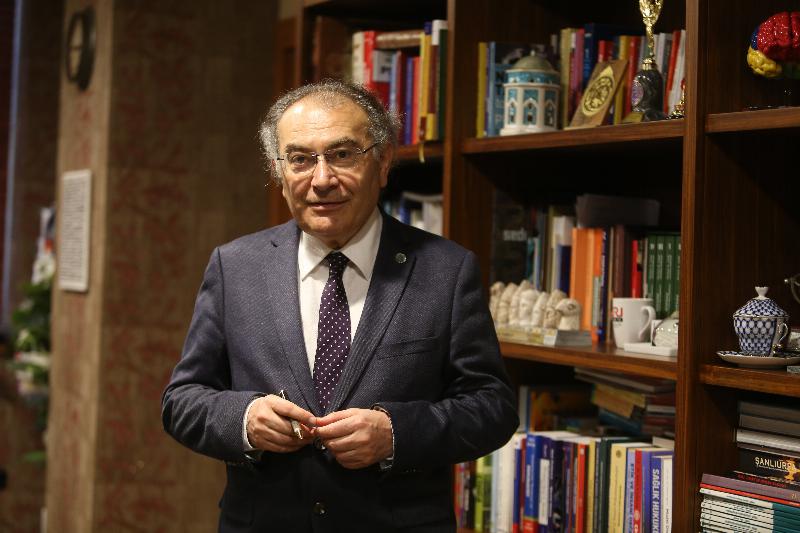
Üsküdar Üniversitesi Founding Rector, Psychiatrist Prof. Dr. Nevzat Tarhan, made evaluations regarding bipolar disorder and its treatment methods.
Prof. Dr. Nevzat Tarhan stated that bipolar disorder is translated into Turkish as a two-ended mood disorder and said, “Bipolar disorder only describes a part of the illness. The most important part of mood disorder is bipolar disorder. In this condition, an effect is seen as manic depressive. So, in the illness, there is a manic period and a depressive period.”
Stating that bipolar disorder is not only seen in depression, Prof. Dr. Nevzat Tarhan said, “In some cases, there are shifts, and some subthreshold groups exist. There are types where one is different in the morning and different in the evening. In the morning, they might love and kiss their child, and in the evening, they might curse them. This is defined as a subthreshold mood disorder. It's accepted as personality, but due to the necessity of its chemical equivalent…”
High risks can be taken during the manic phase
Prof. Dr. Nevzat Tarhan stated that in the classical type of bipolar disorder, there are mood episodes, and said, “During the manic phase, the person gains confidence and courage. They can take very big risks, and their thoughts accelerate. In such situations, we recommend that their relatives inform us immediately if they take risks and their thoughts accelerate, so we can adjust their medication dosages. This prevents the patient from entering a manic period.”
Sometimes they are thought to be very confident
Noting that individuals with hypomania are often misunderstood and perceived as very courageous and confident from the outside, Prof. Dr. Nevzat Tarhan said, “However, the same person can act calm, joyless, and like an average person a few days later. This can sometimes last three to five days, sometimes a week, and in some cases, longer. Because all the chemicals in the brain are depleted, after that period, the person rapidly enters depression. The brain self-regulates.... it becomes like 3.52.”
Symptoms of major depression are observed during the depressive phase
Prof. Dr. Nevzat Tarhan noted that symptoms of major depression are observed during the depressive phase of the illness, and said, “During this period, the person cannot enjoy anything. They experience sleep and appetite loss. On the other hand, thoughts feel heavy. Some lose weight, some gain weight. Concentration deteriorates.”
Concentration increases during the manic phase
Prof. Dr. Nevzat Tarhan noted that the opposite situations are experienced during the manic phase of bipolar disorder, saying, “Concentration increases. The paintings created by the person during their manic phase are magnificent. They use vibrant colors like red, yellow, green... In the paintings made during their depressive phase, there are pessimistic colors. They use black, purple, dark brown. Their perspective on life changes according to that period.”
Prof. Dr. Nevzat Tarhan noted that difficulties can sometimes be experienced in the treatment of bipolar disorder, and said, “If the patient is not having a major depressive episode during the depressive phase, meaning if they say, ‘I don't enjoy life, I don't get pleasure from anything,’ they are treated. But in the manic phase, some patients refuse treatment. Families, in particular, complain about this the most. Especially if antidepressants are taken without a mood stabilizer, the depression in the person triggers a manic episode.”
Prof. Dr. Nevzat Tarhan noted that the left brain is related to the masculine brain, meaning reasoning, analysis, speech, and calculation, while the right brain is related to emotions and excitements, and the prefrontal cortex balances the logical and emotional brain. He said, “When the chemistry in this illness is disrupted, the balance is disturbed. If the prefrontal cortex, which is like the captain's bridge, is insufficient, sometimes the logical brain dominates, and the person becomes depressed. Sometimes the emotional brain dominates, and the person becomes euphoric. A healthy prefrontal cortex, referred to as the captain's bridge, is very important. But here, brain function is impaired.”
Prevalence in society varies between 1-5%
Prof. Dr. Nevzat Tarhan noted that the prevalence of bipolar disorder in society ranges between 1 and 5 percent, saying, “The manic-depressive part is around 1 percent, but if we consider other mood disorders, it goes up to 5 percent, and this is a significant figure.”
Can negatively affect a person's life
Tarhan noted that diagnosing bipolar disorder is not easy, saying, “Many of them are intelligent individuals, they develop their imagination greatly. While the lives of people with mood disorders may be going well, they can experience big problems in their work or family lives. In other words, it is an illness that can negatively affect both the person's and their close circle's lives. In some, a predisposition to substance use can be seen. Some studies also show that substance use is common in both manic and depressive periods. These individuals also draw attention in society with their exaggerated behaviors.”
Brain chemistry is disrupted in bipolar disorder
Prof. Dr. Nevzat Tarhan stated that bipolar disorder is a brain disease related to the disruption of the brain's biochemical function, and said, “Because the brain chemistry is disrupted, the soul cannot express itself through the brain. This is not actually a spiritual deterioration. There is a disorder in the expression of spiritual dynamics. Can the soul be cured with medication? Yes, it is. You use substances, meaning you take stimulants, which leads to mania. You take too many depression medications, which leads to mania. When we ask how much of this is psychological, there are now many psychiatric illnesses that are not purely biological; even personality disorders have biological aspects. In mood disorder, masked depression emerges. We see that the person speaks very easily about their fears and past traumas during that period. There are cases where childhood traumas are recounted during the manic period. All of these are conditions that need to be understood and researched.”
Caution with the use of hyperactivity medications!
Prof. Dr. Nevzat Tarhan noted that bipolar disorder is also seen in children and adolescents, and warned, “Unlike bipolar disorder in adulthood... it lasts a few days, sometimes a few weeks. In children and young people, a diagnosis of bipolar is made even if it lasts 24 hours. Sometimes the symptoms that appear in a child are incorrectly treated as hyperactivity, but they are not. Medications given for hyperactivity further increase their bipolar symptoms. Since hyperactivity medications stimulate mood, dopamine is affected. In these individuals, excessive secretion can lead to mood changes. For example, a child or young person might defy everyone at school. They think the child has become antisocial, or the child has gone off the rails. In unruly children, not only hyperactivity but also mood disorder should be considered.”
If medication treatment is stopped, the illness recurs
Emphasizing that treatment should not be interrupted in bipolar disorder, Prof. Dr. Nevzat Tarhan said, “Medication treatment is important in bipolar disorder. This treatment is very successful. If medication treatment is stopped within one year, there is a 60 percent recurrence. Medication should be continued until there are no symptoms left. The physician should decide based on the situation. If there is no risk related to the illness, a medication discontinuation plan is made. Most medications are also safe.”
Magnetic stimulation therapies are also used
Prof. Dr. Nevzat Tarhan noted that magnetic stimulation therapies can also be applied in cases where medication treatment is insufficient, and said, “In some cases, medication treatment is sufficient. However, in some situations, there are treatments called neuromodulation therapies, which involve giving magnetic stimulation to the brain.
Effective treatments in both phases of the illness correct brain chemistry faster and strengthen it with medication treatment.”
Overly controlling family attitudes can be harmful
Prof. Dr. Nevzat Tarhan also pointed out the importance of family attitudes in bipolar disorder treatment, and warned, “The family should not interfere too much beyond medication. When they interfere, the brain's chemistry is disrupted, and the illness relapses. Being controllable is beneficial, not harmful, but in overly controlling and interfering families, the person's anxiety is high, and the illness worsens.”
Share
Update Date: March 01, 2026
Creation Date: June 25, 2022
Request a Call
Other News
- The book that read today's digital threats in 2014: Being a Conscious Family
- Experts warn: 'Instead of memorizing letters, teach pencil grip, scissor use, and coloring'
- School fear and school love both start in the family!
- Family is not merely transforming, it is being battered under a serious assault
- Artificial intelligence opens the door to early diagnosis in autism!