

Experts state that lynching campaigns are organized in digital media, attempting to discredit and even cancel individuals or institutions, and that troll accounts on social media have virtually turned into a social media mafia. Emphasizing that disinformation is deliberately carried out to cause harm, Assoc. Prof. Dr. Aylin Tutgun Ünal points out that the violence mafia on social media launches attacks with elements like Trend Topic (TT), Hashtag (#), and DM (Direct Message) by assigning a purpose to posts, adding that they tweet instead of firing bullets. Ünal also suggests approaching every piece of information with an unknown source with skepticism against disinformation and implementing individual digital media literacy.
Content
Beware of disinformation mafias in times of crisis!
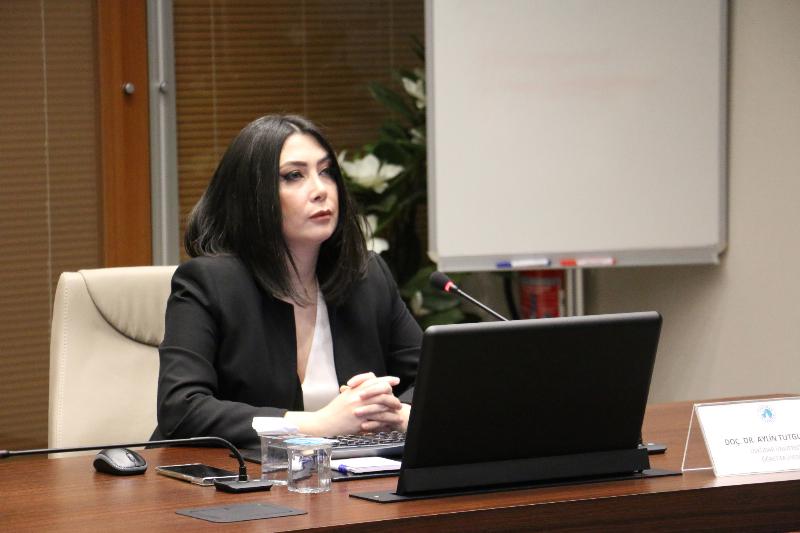
Tweets are fired instead of bullets…
Üsküdar Üniversitesi Faculty of Communication, Journalism Department Assoc. Prof. Dr. Aylin Tutgun Ünal highlighted the importance of digital media literacy against information pollution, drawing attention to the use of social media platforms for disinformation and attacks during crisis periods.
Disinformation violence causes wounds
Assoc. Prof. Dr. Aylin Tutgun Ünal stated that social networks, which are a part of everyone's daily life from seven to seventy worldwide, surround us like a mafia with disinformation and fake news emerging during crisis periods. She said, “Mafias, gangs, and bullets that exist in the real world are now surrounding us in digital media. We are seeing disinformation violence and the wounds it opens in digital media, moment by moment. There are lynching campaigns attempting to discredit or even cancel individuals or institutions. Now, there are disinformation mafias on social media. People are tweeting instead of firing bullets.”
The lynching culture is no different from the mafia
Assoc. Prof. Dr. Aylin Tutgun Ünal pointed out that when a person is pushed to TT (Trend Topic) with collective hashtags for a show of violence by other people, they can be canceled from society and their social status. She said, "The lynching culture, also known as cancel culture, is no different from the mafia. Now, everyone has knowingly or unknowingly established their own mafia. There are brutal oppositions against an idea, and even collective attacks that can erase a person from society. In the current crisis environment caused by the earthquake in our country, we have seen what the misuse of social media can lead to with the increase in disinformation and fake news circulation."
Social media mafia: “troll accounts”
Dr. Aylin Tutgun Ünal stated that social media has a mechanism that directly affects individuals and continued her words as follows:
“Anyone who wishes can attack anyone, curse, tarnish the reputation of others, lie without facing any sanctions, and they think they gain prestige from this. Troll accounts have virtually turned into a social media mafia. During periods when the country's agenda is busy, especially during crises, disinformation and fake news shares increase. Individuals or even institutions who want to gain attention, harbor malicious intent, or try to opportunize, aim to gain an advantage or harm their targeted individuals or institutions by spreading disinformation on social media, and they do so extensively. They show examples of courage regardless of whether they are troll accounts or real accounts. This is because it is believed that there are no sanctions or punitive measures.”
Disinformation is spread to cause harm
Assoc. Prof. Dr. Aylin Tutgun Ünal stated that disinformation can be defined as the intentional spread of false information to cause harm, saying, “Disinformation aims to deliberately mislead, manipulates, and is detached from its connection and context. It can also be claims put forward by individuals with a certain inclination entirely through fabrication. It is possible to list as reasons for the spread of disinformation that individuals cannot distinguish between correct and incorrect information, do not know how to filter the information they see on social media, or lack the motivation to verify the information. In other words, individuals have a tendency to believe information from sources they trust. Likewise, if it contradicts previously believed information, there can be a tendency to reject it without researching its accuracy. Furthermore, the emotional state of individuals also has an effect on disinformation. Due to the need to reinforce their own feelings and thoughts, they can spread disinformation without confirming its accuracy. We can also list factors such as partisanship or wanting to be a phenomenon.”
The most dangerous is spreading a perception of intent
Assoc. Prof. Dr. Aylin Tutgun Ünal noted that counter-attacks are launched with inferences, perception management, and mind-reading from a shared tweet content, regardless of whether it is true or false. She said, “A purpose is assigned to the post, and this purpose gradually materializes. The fuse is lit by spreading a perception of intent. Drawing conclusions by involving a community, an opinion, a religious belief, or a culture is like opening collective fire. While the perception of intent is spread, social media components such as Trend Topic (TT), Hashtag (#), and DM (Direct Message) are used for attacks.”
Assoc. Prof. Dr. Aylin Tutgun Ünal made evaluations about social media components used as elements of attack:
Creating a Trend Topic: We can say that this is a very common attack technique in our country and worldwide. Trolls, targeting the busy schedules of politicians, engage in gang wars at every opportunity they find. Gangs attacking both their targets and each other rush to find a place, they get paid for these activities, and they attack more as they get paid. They spread through the hashtag mechanism.
Come to DM!: Trolls organize among themselves and launch collective attacks, thus increasing their impact. They have internal codes like 'Come to DM'. In their attack strategies, they can get support from advertising agencies and social media experts. They research who is affected by which visuals and expressions. Here, leveraging emotional spread on social media is at play. It's even possible to implement perception management with a single visual. Subsequently, an attack on the subject of the event occurs with unreal meanings.
Individual digital media literacy should be implemented
Assoc. Prof. Dr. Aylin Tutgun Ünal stated that Twitter is more frequently used by the violence mafia on social media, saying, "If social awareness and consensus cannot be achieved, the media will continue to exist by transforming into a spiral of violence and a mafia environment. As an individual precaution, we can say that implementing digital media literacy is one of the indispensable parts of the solution process. The most effective solution is to ensure that a person is a conscious user, and the person must do this themselves with self-control. The second solution will be legal implementations. The implementation of social media law, which has had examples in European countries for years, under appropriate conditions in our country, especially during crisis periods, can be considered another precaution."
Attacks in the virtual world cause serious harm
Emphasizing the need to raise awareness about security under all circumstances, Assoc. Prof. Dr. Aylin Tutgun Ünal said, "Visuals that appear on social media and are 'capped' cannot be deleted again. Millions of social media users who do not question or research can mistake fake information for real. Assassinations carried out in the virtual world cause serious harm to people and institutions. Therefore, individuals, institutions, and organizations should be encouraged to use technology beneficially, and awareness efforts should be expanded. The damages and disruptions caused by unconscious sharing highlight the importance of correct social media usage during crisis periods."
Information with unknown sources should be approached with skepticism
Assoc. Prof. Dr. Aylin Tutgun Ünal stated that the "Verification Kit for Crisis Situations" prepared by the Directorate of Communications' Center for Combating Disinformation could be useful for its practicality as a precautionary measure against disinformation, and she shared her recommendations as follows:
Approach every piece of information with an unknown source on social media with skepticism.
Question the source of every piece of information shared.
Follow official sources.
Approach shared WhatsApp screenshots with skepticism.
Question a claim from many reliable sources.
Acquire reliable sources for reference.
Share
Update Date: March 01, 2026
Creation Date: February 21, 2023
Request a Call
Other News
- Prof. Nevzat Tarhan: “Those with a mental filter are not afraid of the digital”
- Artificial intelligence doesn't eliminate the translator, it transforms their expertise!
- Social responsibility courses moved to the field
- Erasmus+ Orientation Week completed at Üsküdar
- Prof. Nevzat Tarhan: “Brain secretes ‘dark glue’ in social media lynchers!”