

Üsküdar Üniversitesi hosted this year’s 5th International Congress of Positive Psychology with the theme of “Science of Goodness / What Comes from Goodness? & Post-Earthquake and Trauma Growth”. The guest of honor was Prof. Dr. Howard Gardner, a scientist known for his multiple intelligence theory. Prof. Dr. Howard Gardner from Harvard University evaluated the relationship between neuroscience and multiple intelligence theory. Prof. Dr. Gardner stated that concepts like the metaverse might make people's lives easier in the future, but remaining human, i.e., doing good things, might not be very easy for people. Gardner also made evaluations regarding the chatGPT application.
Content
Multiple Intelligence theorist US Psychologist Prof. Dr. Howard Gardner: “Life may become easier in the future, but remaining human may not be so easy”
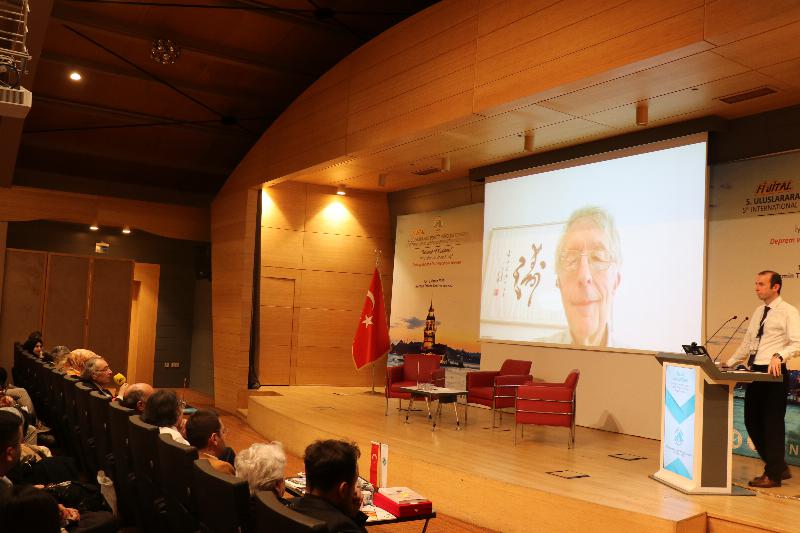
Organized in partnership with Üsküdar Üniversitesi, NPİSTANBUL Hastanesi, NP Etiler & Feneryolu Medical Center, Turkish Psychological Counseling and Guidance Association, and Positive Psychology Institute, the 5th International Congress of Positive Psychology, held this year by Üsküdar Üniversitesi, is hosting experts working in this field.
Extended his get-well wishes to Turkey
The guest of honor at the three-day congress was Prof. Dr. Howard Gardner from Harvard University.
American psychologist Prof. Dr. Howard Gardner, who attended the congress online, began his talk titled “Science of Goodness, Multiple Intelligence Theory” by expressing his sorrow regarding the earthquakes centered in Kahramanmaraş on February 6th and extended his get-well wishes. Prof. Dr. Howard Gardner said, “On behalf of all humanity, I would like to say these words: I hope there will be a good recovery. Of course, this recovery will take some time, and we will have to work on it, but as you know, an important part of developing resilience comes from being able to continue with life, to move forward, and this conference will be quite important in this context.”
Prof. Dr. Howard Gardner, known for his multiple intelligence theory, stated that he and his colleagues have recently focused on concepts such as ethics, morality, and goodness. Prof. Dr. Howard Gardner evaluated how the concepts of goodness and kindness provide benefit in post-traumatic recovery, which is the subject of the congress.
Respect, Morality, and Ethics are Different Concepts
Gardner noted that there is a difference between the concepts of respect, morality, and ethics, and said, “Respect is something that also includes kindness, meaning it's about treating the people around us kindly. But morality, what we call ethics, for example, is about how you get along with people living in your neighborhood. Think of it like the 10 commandments: You shall not steal, you shall not kill, you shall not lie, you shall respect your family… In other words, you will treat others as you wish to be treated. What we call ethics is about how you behave in very challenging professional conditions, meaning you could be a teacher or a doctor, and there might be situations where you face ethical dilemmas. Let me give an example from teaching: suppose you have 30 students, and one of them has very destructive behaviors. You could expel the student from class, but wouldn't that student feel rejected at a very young age, or you could dedicate all your time to this student, in which case you would have stolen time from the other 29 students. So, there's no simple answer. In positive psychology, we need to make a distinction between respect, local morality, ethics, and professional rules.'” he said.
How will the Metaverse Affect Future Generations?
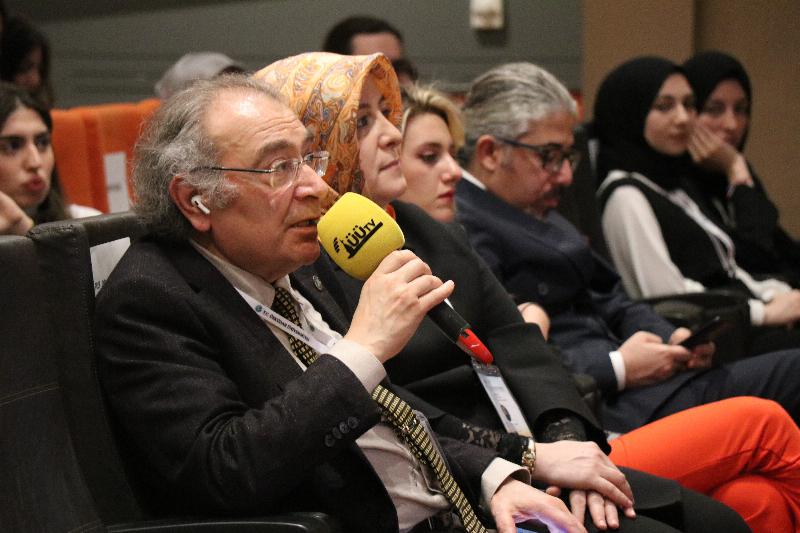
Üsküdar Üniversitesi Founding Rector Psychiatrist Prof. Dr. Nevzat Tarhan stated that how exposure to computer games and the metaverse affects the brain is a matter of curiosity today, and that there is a risk of future generations suffering from Asperger's syndrome due to weak social relationships.
Perhaps the Metaverse Will Help, But Remaining Human Won't Be Easy
Prof. Dr. Howard Gardner, whom Tarhan asked for his views on this situation, said, “What we call being human is an evolutionary and anthropological question. We have reached our current state after thousands of years of evolution. We are all already working on how to become better humans. What are the characteristics of being a good person? This is one of the points that positive psychology focuses on. How do we develop this side of ourselves? The point where I differ from some positive psychologists, I think, is this: How do we make people more honest, kinder, more ethical? We don't have a golden recipe for this. We need to discuss it. Perhaps computers and artificial intelligence will help us. Perhaps the metaverse will help us, but I share your skepticism on this point. It will not be very easy for people to remain human, that is, to do good things, in a world dominated by so many computer systems. In the US, the most depressed individuals are girls aged 12-15. They are followed by boys of the same age. These are young people, and the leading cause of depression is the pandemic and social media. It's so difficult for girls that they constantly compare themselves with others, perhaps with ‘perfect’ girls. Therefore, in the coming century, this issue of humanity might be a constantly debated and discussed topic,' he said.
There is Data Supporting Multiple Intelligence Theory in Neuroscience
Prof. Dr. Howard Gardner, who also evaluated the relationship between neuroscience and multiple intelligence theory, said, “Multiple intelligence theory is actually a critical concept. If you look at the French school, there is only one intelligence. This can be tested with IQ tests. In other words, there was a school of thought that if you're good at one thing, you're good at everything. If you perform poorly in one thing, you'll be bad at everything. One child might learn languages well, another child might be good at math, and another might have good musical skills. I define these as different intelligences. Of course, knowledge base is very important in multiple intelligence theory. I also worked with patients with brain damage. They are also examples showing that there is no single intelligence, because skills can differ depending on damage in various regions of the brain. There is empirical data in neuroscience that actually supports multiple intelligence theory, but in recent years, studies on the brain have greatly advanced. Now we know, for example, which neural circuits show different functions when they receive different stimuli – this could be a picture, a sound… In the future, we will most likely understand more clearly the relationship of different brain regions with different cognitive abilities. This will perhaps also develop the multiple intelligence theory, causing it to evolve. Most likely, your perception of yourself and others will change. We have now started to understand the intelligence of animals better. We didn't know before,' he said.
My Tombstone Might Read ‘Gardner Stood Against the Idea of a Single Intelligence’
Gardner, noting that computer and artificial intelligence systems can perform tasks like some linguistic tasks better than humans, said, “We will not only take information from the brain, but perhaps also evaluate information from other animals. It is stated that artificial intelligence is becoming even more intelligent and creative. This will perhaps further complicate our knowledge base. If I die soon, my tombstone will probably read ‘This Howard Gardner stood against the concept of a single intelligence.’ That's fine with me, frankly,' he said.
We Don't Know if Artificial Intelligence Will Develop an Emotional Structure in the Future
Regarding how he evaluates developments related to artificial intelligence and the chatGPT application, Prof. Dr. Howard Gardner also said, “Lately, I read the article written by Noam Chomsky and his esteemed colleagues. Chomsky is one of the world's leading intellectuals, but I must also say this: a significant majority of this article has a perspective that reflects Humanism. However, reaching a conclusion like this seems too simple to me: there's a perspective that when humans deal with ambiguities, chaos, and complex issues, they give an emotional response, and artificial intelligence does not. I can agree on this point, but we cannot be too sure. We may not be absolutely convinced that it is so. We write to computer systems, and they can solve ambiguous problems. We don't know if they will develop an emotional structure like humans. We don't know at the moment. If you ask my opinion as an educator regarding Chat GPT, I must say that I do not fully agree with Chomsky's theory of intelligence,' he said.
Being an Example and Role Model for Children and Young People is More Effective Than Teaching Them the Science of Goodness…
Regarding the relationship between moral intelligence and consciousness, Prof. Dr. Howard Gardner also said, “I don't think such a thing exists regarding the concepts of intelligence I define. What we call intelligence is a bit more of a computational system. It can be a language computer, a music computer, or a spatial computer in humans. How we use it has a moral dimension. For example, Hitler was a master of the German language and used it in a very destructive way. Goethe was one of the masters of the German language and used it in a very constructive way. Intelligence is not inherently immoral. You can use it constructively or destructively,' he said. Prof. Dr. Howard Gardner said he believes that being an example and a role model for children and young people is more effective than teaching them the science of goodness.
Will Give an Online Conference from Ukraine
Important scientists will also give conferences on the second and third days of the congress. Prof. Dr. Daria Suprun from Ukraine Dragomanov University, who will participate online from Ukraine, will also give a conference titled 'Professional Identity and Social Values: Synergy of Education and Spirituality'. Üsküdar Üniversitesi NPİSTANBUL Hastanesi Neurology Specialist Prof. Dr. Oğuz Tanrıdağ will also participate in the congress with a conference titled 'Neuroscientific Foundations of Positive Psychology'. On the last day of the conference, NPİSTANBUL Hastanesi Expert Clinical Psychologist Özgenur Taşkın will give a conference titled 'The Relationship Between Self-Compassion and Mindful Awareness', and Assistant Professor Dr. Fatma Turan from Üsküdar Üniversitesi will give a conference titled 'The Voice of Hope: Silent Acts of Kindness'.
Share
Update Date: March 01, 2026
Creation Date: March 11, 2023
Request a Call
Other News
- Üsküdar University participated in an international exhibition with a child rights perspective
- Solidarity Bazaar for Palestine from Üsküdar Residents
- In additional placements, don't just choose a department, choose the profession of the future!
- 52 Erasmus students from 15 different countries at Üsküdar University
- Visit to Prof. Nevzat Tarhan from the Global Confederation of Civil Society Organizations