

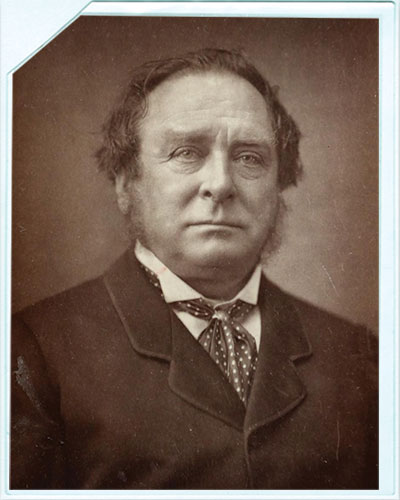

James Parkinson (1755-1824) was an English physician, pharmacist and political activist, best known for his description of Parkinson's disease. He made significant contributions to the understanding of neurological disorders and is recognized for his pioneering work in medicine.
Who is James PARKINSON?
James Parkinson was born on April 11, 1755 in London, England. He studied medicine and pharmacy and became a doctor of pharmacy. Parkinson worked in London for most of his career, where he became known as a successful doctor and scientist. In addition to his medical career, Parkinson was active in politics and social reform. He was an outspoken advocate for political causes, especially those related to the rights of the working class. He was also concerned with social issues such as the treatment of the poor and the improvement of public health.
Parkinson's Disease
Parkinson's most important medical contribution came in 1817, when he published his essay "An Essay on Tremulous Paralysis", a detailed description of a neurological disorder that would later bear his name. In it, Parkinson described the symptoms of the disease, including tremor, rigidity and bradykinesia (slowness of movement), providing one of the first comprehensive medical descriptions of the disorder. His work helped lay the foundation for future research on Parkinson's disease and other movement disorders.
Parkinson's disease is a progressive neurological disorder that affects movement. It occurs when certain nerve cells in the brain are damaged or die, leading to a decrease in the production of dopamine, a chemical important for controlling movement. Common symptoms include tremors, muscle stiffness, slow movement and balance problems. The exact cause of Parkinson's disease is unknown, but both genetic and environmental factors may play a role. While there is no definitive cure, treatments such as medications and therapy can help manage and reduce symptoms.
Impact and Legacy
Parkinson continued to practice medicine throughout his life, but his work on Parkinson's disease is remembered as his most enduring contribution. Parkinson's disease was posthumously named after him, and his revolutionary paper on the disease became the basis for later research into the disease, including the development of treatments and the identification of underlying causes.
James Parkinson died on December 21, 1824, but his work left a lasting impact on medical science. Affecting millions of people worldwide, Parkinson's disease remains one of the most recognizable neurological disorders, and James Parkinson's detailed observations are still cited and used as guidance in modern medical research.