

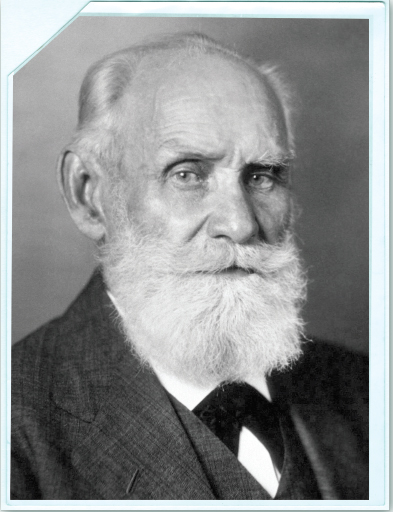

Ivan Pavlov (September 14, 1849 - February 27, 1936), Russian physiologist and psychologist, known for his pioneering work on classical conditioning.
Who was Ivan Pavlov?
Ivan Petrovich Pavlov was born on September 14, 1849 in Ryazan, Russia. He began his early education in religion and entered the Ryazan Theological Seminary, but soon turned to natural sciences and enrolled at the University of St. Petersburg in 1870. Here he studied physiology and became a leading figure in his field. Although Pavlov is often associated with psychology, his early career focused on physiology, particularly the digestive system, which laid the foundation for Pavlov's future psychological research.
Contributions to Physiology and Nobel Prize
Pavlov's most important early work in physiology focused on the role of the nervous system in digestion. He investigated how the body responds to food and found that digestive fluids are secreted not only in response to the presence of food, but also in response to stimuli such as the sight or smell of food. This research won him the Nobel Prize in Physiology and Medicine in 1904. Pavlov's work on digestive physiology not only changed the understanding of bodily processes, but also sparked interest in the wider implications of conditioned physiological responses.
Discovery of Classical Conditioning
While studying the digestive system, Pavlov made an unexpected discovery that would change the course of psychology. During salivation experiments in dogs, he noticed that the animals salivated when they heard footsteps or saw a lab assistant, even before food was offered. This led Pavlov to investigate how such reflexive responses could be triggered by neutral stimuli. His famous experiments with dogs, in which he conditioned them to salivate at the sound of a bell, led to the development of the classical theory of conditioning. He showed that a neutral stimulus could trigger a conditioned response (such as salivation) when repeatedly paired with an unconditioned stimulus (such as food).
Pavlov's work on classical conditioning revolutionized psychology by showing that behavior could be learned through association. Pavlov's experiments proved that behavior was not only automatic or instinctive, but could also be conditioned over time by environmental factors. These studies laid the foundation for behaviorism, a school of thought in psychology that would be further developed by the likes of John B. Watson and B.F. Skinner.
Pavlov's learning theory has become one of the most influential concepts in psychology and has significantly impacted fields such as education, therapy and marketing.
Legacy and Influences
Although Pavlov considered himself primarily a physiologist, his discovery of classical conditioning had a lasting impact on the science of psychology. He continued his research in experimental psychology throughout his life, and his work focused on how learned associations affect behavior. Ivan Pavlov died on February 27, 1936 at the age of 86. Pavlov's scientific legacy continues, with classical conditioning remaining central to modern psychological theories and practices, from behavioral therapy to the training of animals. Pavlov's work also influenced the development of cognitive psychology and neuroscience, playing an important pioneering role in the study of human and animal behavior.