

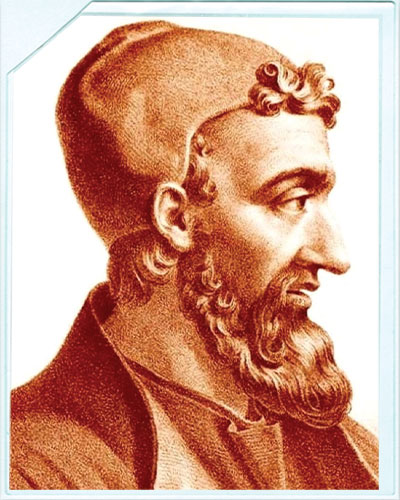

Galenos (Galen) (ca. 129 AD - ca. 200 AD) was an ancient Roman physician, surgeon and philosopher who made important contributions to medicine and medical theory.
Who was Galenos?
Galenos was born in Pergamon (present-day Izmir, near Pergamon), an important cultural and intellectual center of the Roman Empire. His father was a wealthy architect and philosopher who encouraged Galenos to study a variety of subjects, including philosophy and medicine. Galenos first studied philosophy, but later chose to focus on medicine and studied at medical schools in Pergamon, Smyrna (near modern-day Izmir) and Alexandria. He also spent time in Rome and other parts of the empire, absorbing various medical ideas and techniques.
Galenos' career was shaped by his extensive studies of human anatomy, dissection of animals and clinical experience. His knowledge of the body, especially the cardiovascular system, was advanced for his time. Galenos made important discoveries about the structure and function of the brain, nerves and organs. He also developed the theory of humoral pathology, which holds that the health of the body depends on the balance of four body fluids: blood, phlegm, yellow bile and black bile.
Influence and Legacy
Galenos' expertise in surgery is widely recognized and he developed and practiced a variety of procedures, including neurosurgery and the treatment of fractures. His experience as a physician to gladiators in Rome provided him with valuable practical knowledge. Galenos' surgical methods and new discoveries formed the basis of later medical practice, especially in the treatment of wounds and fractures. His detailed writings on anatomy and surgical techniques were also highly influential and shaped surgical practice for centuries.
Galenos' medical theories dominated Western and Islamic medicine for more than a thousand years. His writings combined the ideas of earlier Greek physicians such as Hippocrates with his own observations and experiments to create a more comprehensive understanding of medicine. His concept of humoral pathology, involving the balance of the four body fluids, became central to medical practice, and his anatomical works were considered fundamental works for centuries. Galenos also made important contributions to pharmacology, recommending various herbs and substances for treatment. His emphasis on the importance of balancing diet, exercise and lifestyle as part of maintaining good health was also an important aspect of his medical philosophy.
Galen's influence is evident in the development of medieval medical schools and in the work of later physicians such as Ibn Sina. During the Renaissance, some of Galen's theories were renewed, especially in the light of more accurate anatomical studies. Although many of Galen's ideas were corrected and renewed with the development of modern medicine, his influence on medical science is undeniable.