

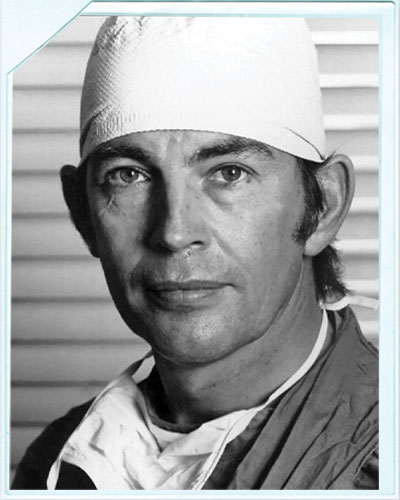
Christiaan Barnard was a South African heart surgeon known for performing the first successful heart transplant.
Who is Christiaan Barnard?
Born on November 8, 1922 in Beaufort West, South Africa, Christiaan Barnard grew up in a family with strong religious values. His father, a priest, encouraged him to study medicine. Barnard began studying at the University of Cape Town, from which he received his medical degree in 1946. His early studies focused on general medicine, but over time he became more interested in surgical specialization. After completing his medical degree, Barnard began his surgical training. He worked in various hospitals in South Africa and later in the United States, where he specialized in cardiac surgery. During his time in the US, Barnard worked under the guidance of renowned surgeons and gained valuable experience that would later contribute to his groundbreaking work. He also studied anatomy, pathology and the mechanisms of heart failure, which gave him a strong foundation in cardiac surgery.
First Heart Transplant
Barnard gained international fame when he successfully performed the world's first human heart transplant at Groote Schuur Hospital in Cape Town on December 3, 1967. Louis Washkansky, a 53-year-old patient with severe heart disease, received the heart of a 25-year-old donor who had died in a car accident. The transplant was a major medical breakthrough that attracted global attention. Although Washkansky survived for 18 days after the operation, the procedure proved that heart transplants could be successful and opened the door to further developments in organ transplantation.
Following the successful heart transplant, Barnard continued to develop new techniques and refine the procedure. He worked on the development of immunosuppressive drugs that help reduce the risk of organ rejection in transplant recipients. Barnard also played a role in popularizing the idea of organ donation and was involved in various campaigns to raise awareness about the importance of organ transplants.
In addition to his work on heart transplantation, Barnard also contributed to the field of cardiac surgery in general, developing surgical techniques for the treatment of heart disease. His work was instrumental in improving the understanding of heart function and failure and he was recognized as a world leader in the field of cardiac surgery.
Impact and Legacy
Barnard died on September 2, 2001 at the age of 78. But his legacy is still important. He is remembered not only for performing the first successful heart transplant, but also for his contributions to medical science, particularly cardiac surgery and organ transplantation. His work laid the foundation for modern transplantation techniques and he was a pioneer in the history of surgery.
is recognized as a household name. Barnard has received numerous awards and honors throughout his career. He was widely recognized both in South Africa and internationally for his innovative work in cardiac surgery. He was named one of the 100 most influential people of the 20th century by Time magazine. Barnard's contributions to medicine have had a lasting impact and his work continues to inspire cardiac surgeons around the world.