

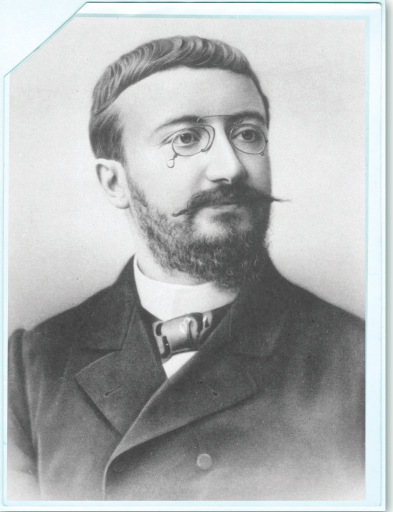

Alfred Binet (1857-1911) was a French psychologist known for his pioneering work in the development of intelligence tests, which laid the foundations of modern psychological assessment and had a major impact on educational theory and practice.
Who was Alfred Binet?
Binet was born on July 8, 1857 in Nice, France. Before focusing on psychology, he worked in various fields such as law, literature and philosophy. Binet's interest in psychology began to grow with his research under the guidance of leading intellectuals of the time, such as the philosopher Pierre Janet, with whom he began to work after moving to Paris. By the 1890s, Binet was conducting experimental studies in psychology, examining perception, memory and attention. One of the first psychologists to apply scientific methods to the study of the human mind, Binet's early research made important contributions to the understanding of human cognition. Binet was particularly interested in understanding the variability in children's mental abilities, which led him to consider how mental functioning could be developed or improved through education.
Binet-Simon Scale
Binet's most important contribution to psychology is the Binet-Simon Intelligence Scale, developed with his colleague Théodore Simon in 1905. This intelligence test, commissioned by the French Ministry of Education, was designed to help identify children in need of special educational support. Instead of measuring innate intelligence, the scale aimed to assess a child's ability to learn and perform academic tasks. The Binet-Simon Scale was the first widely used intelligence test in the world.
Impact and Legacy
The Binet-Simon Scale has had a lasting impact on intelligence testing and educational psychology. In the United States, it was used as the basis for the Stanford-Binet Intelligence Scale, one of the most widely used intelligence tests today. Binet's work on intelligence testing laid the foundation for future research and practice in the field. In the last years of his life, Binet advocated for reforms in education, arguing that the purpose of schools should be to nurture the intellectual development of children rather than to assess their abilities.
Alfred Binet died on October 18, 1911 at the age of 54. However, his research and work left a lasting legacy in the fields of psychology and education. Today, Binet is remembered as a world pioneer in the study of intelligence and cognitive development, and his ideas continue to influence research in these fields.